Testing Layers
Not released
martin test is not in any release yet, and its spec file may still change.
It is only built with the unstable-generate feature:
martin test renders real rows through the layers of table sources in
bulk mode, and keeps the result in a spec file.
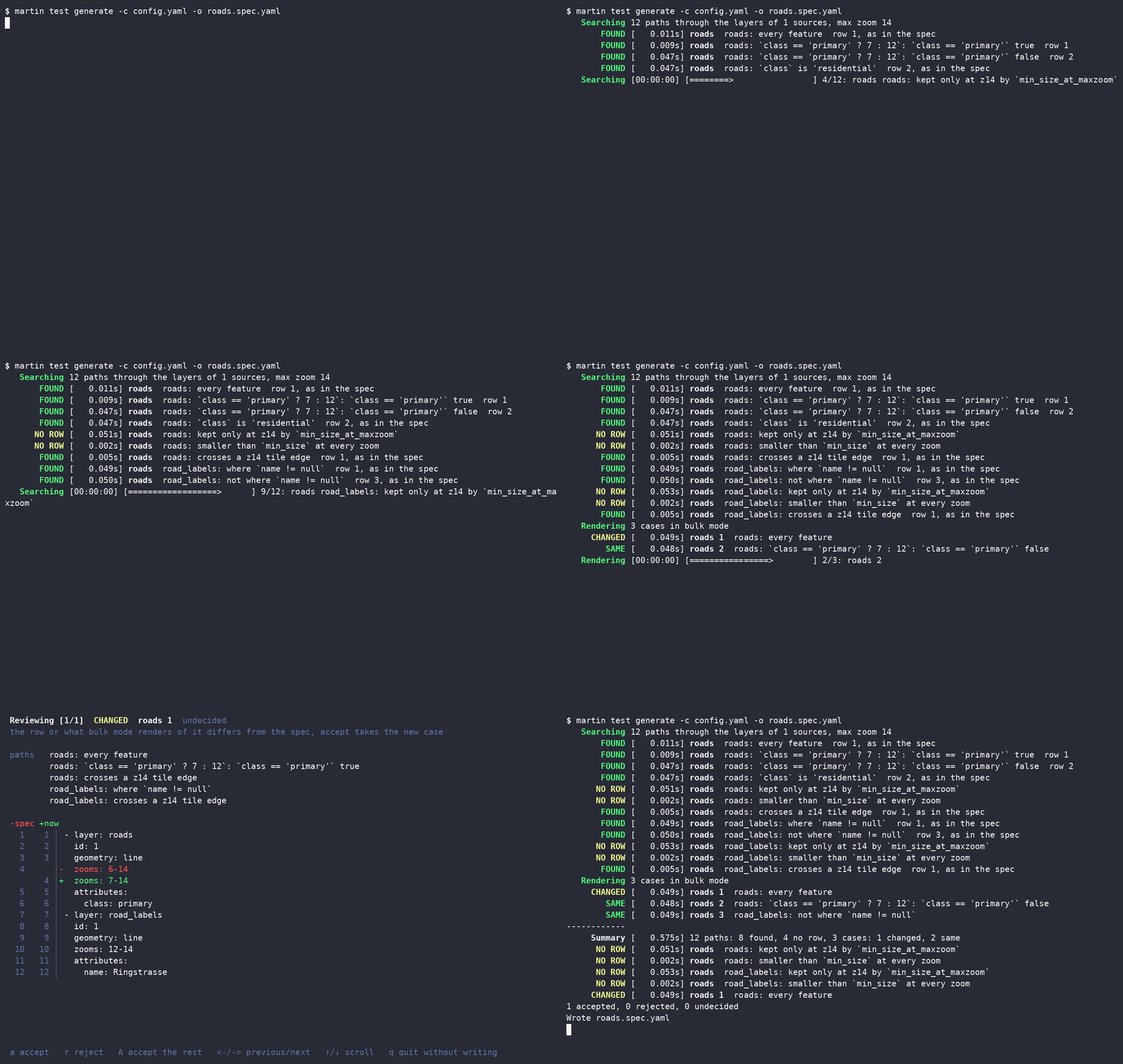
After a change to the layers, run shows how the spec's cases changed. Only generate finds rows for paths the
change added, so run it to cover them, and to update the spec.
Usage
martin test generate --config config.yaml --output roads.spec.yaml
martin test run --config config.yaml roads.spec.yaml
Tests PostgreSQL table sources with layers and an id_column, from one postgres section.
postgres:
  connection_string: postgres://postgres@localhost:5432/db
  tables:
    roads:
      schema: public
      table: roads
      srid: 4326
      geometry_column: geom
      geometry_type: LINESTRING
      id_column: id
      filter: "class IN ('primary', 'residential')"
      properties:
        id: int8
        class: text
        name: text
      layers:
        roads:
          minzoom: "class == 'primary' ? 6 : 12"
          attributes: [class]
        road_labels:
          minzoom: 12
          where: "name != null"
          attributes: [name]
Paths
Paths are the distinct, interesting cases this configuration can produce.
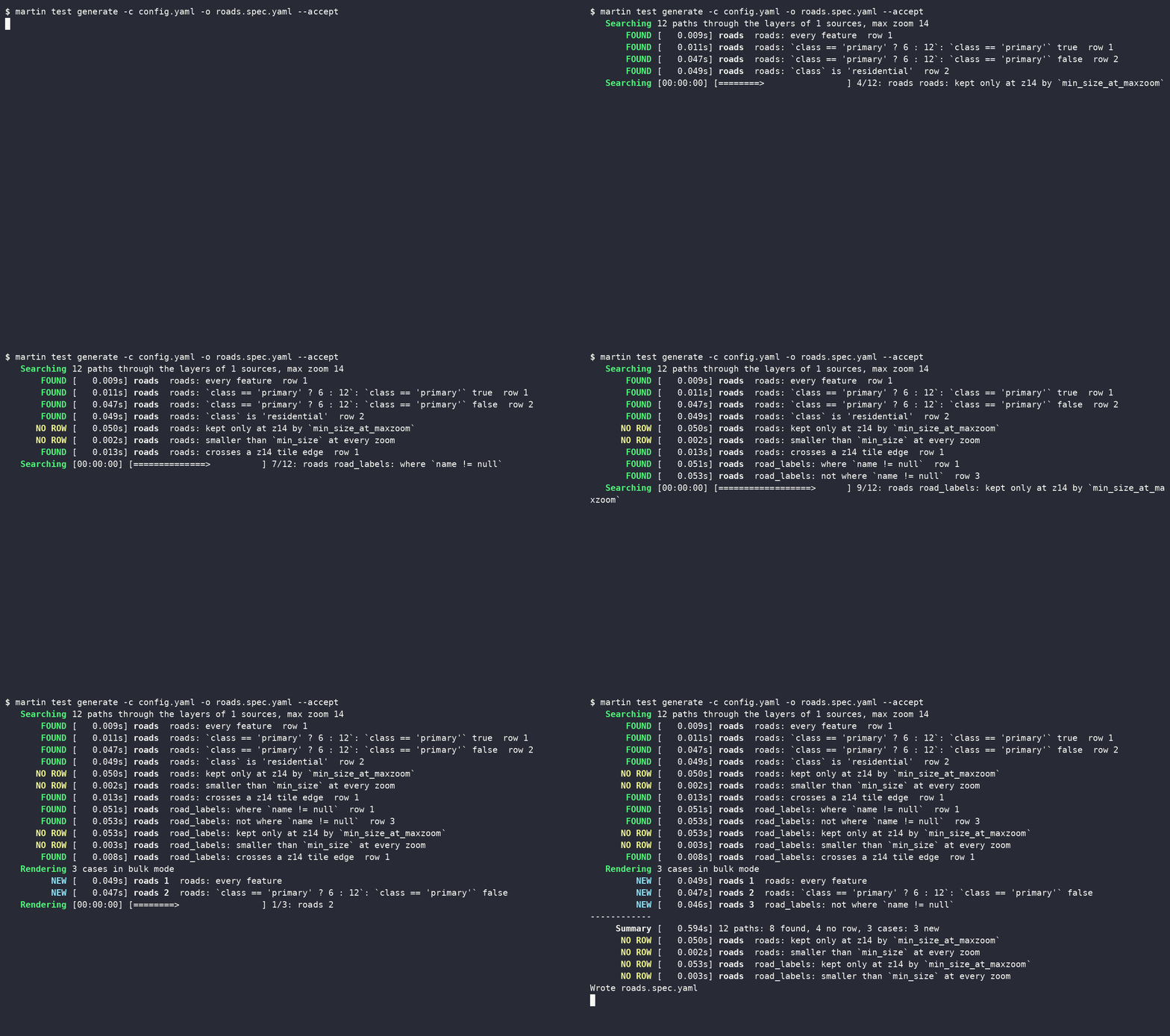
A row on several paths is one case. NO ROW: no row takes the path.
Spec file
max_zoom: 14
cases:
- source: roads
  paths:
  - "road_labels: dropped, `where: name != null` is false"
  - "roads: class 'residential' -> minzoom 12"
  input: # (1)!
    class: residential
    geometry: LINESTRING(16.34 48.22,16.341 48.221)
    id: 3
    name: null
  output: # (2)!
  - layer: roads
    id: 3
    geometry: line
    zooms: 12-14
    attributes:
      class: residential
- The row's
id_column, the columns the layers read, and its geometry as WKT.runreportsROW CHANGEDwhen the row no longer matches. - What bulk mode writes: one entry per feature and layer, with its zooms and attributes.
Running
After changing minzoom to "class == 'primary' ? 7 : 12":
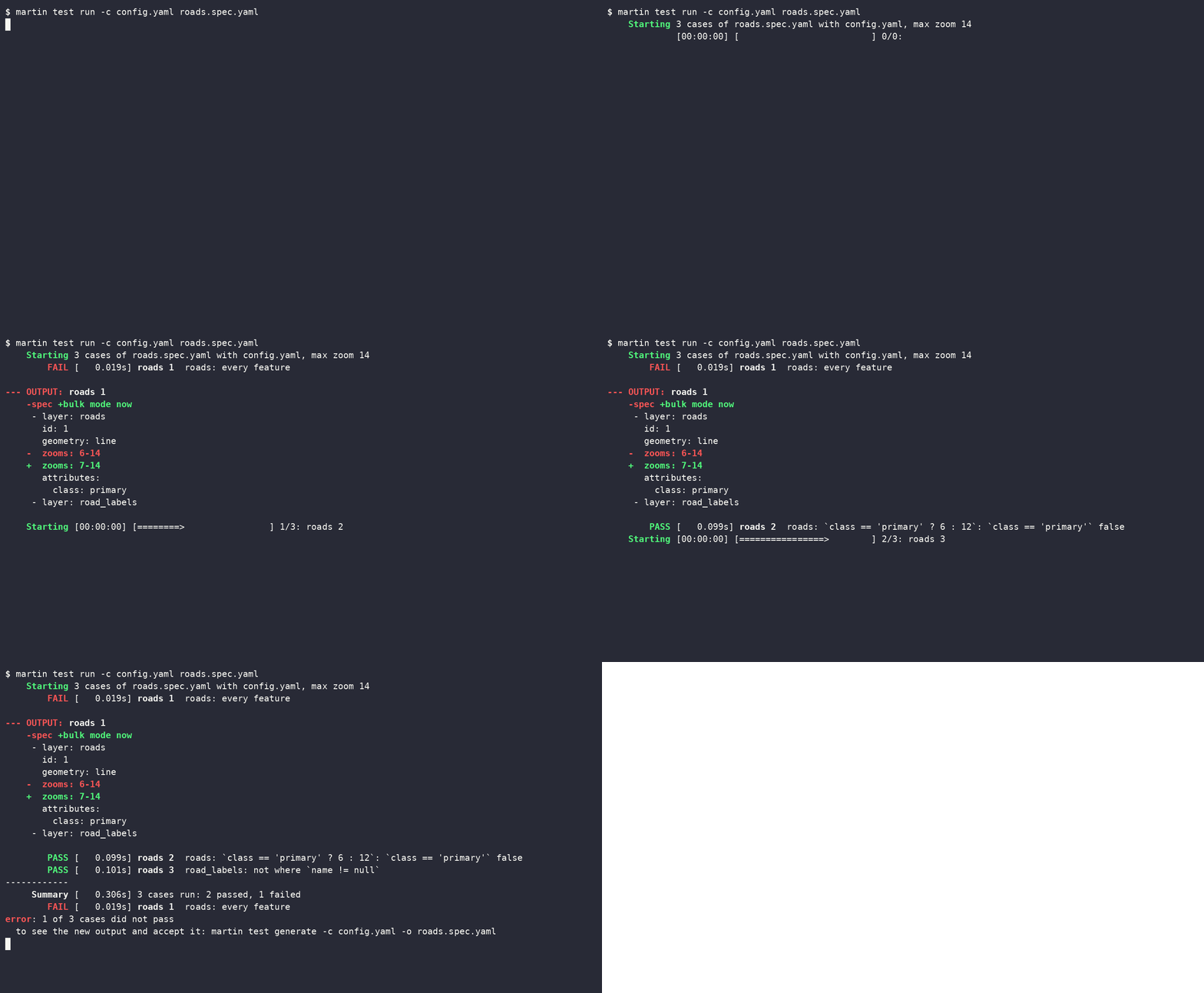
run exits with 0 when all cases pass, 1 otherwise, and 2 on an error.
Generating
In a terminal, generate opens a review. --accept writes every case instead. Without a terminal, it
writes a new spec, or prints the diffs of an existing one and exits with 1.
A --max-zoom other than the spec's cannot keep its cases as they are, so the review only writes once each
changed and gone case is accepted.